How to Start A Fund
A Comprehensive Guide to Launching a CTA, CPO, or Hedge Fund
A Practical Roadmap for Emerging Managers
Launching a hedge fund, CTA, or CPO is not simply about running a profitable strategy. It is about building a regulated investment business that investors trust with their capital.
If you are considering launching your own fund, you are stepping into one of the most complex, and potentially rewarding, entrepreneurial paths in financial services.
We created two versions of our guide to help you navigate the process:
-
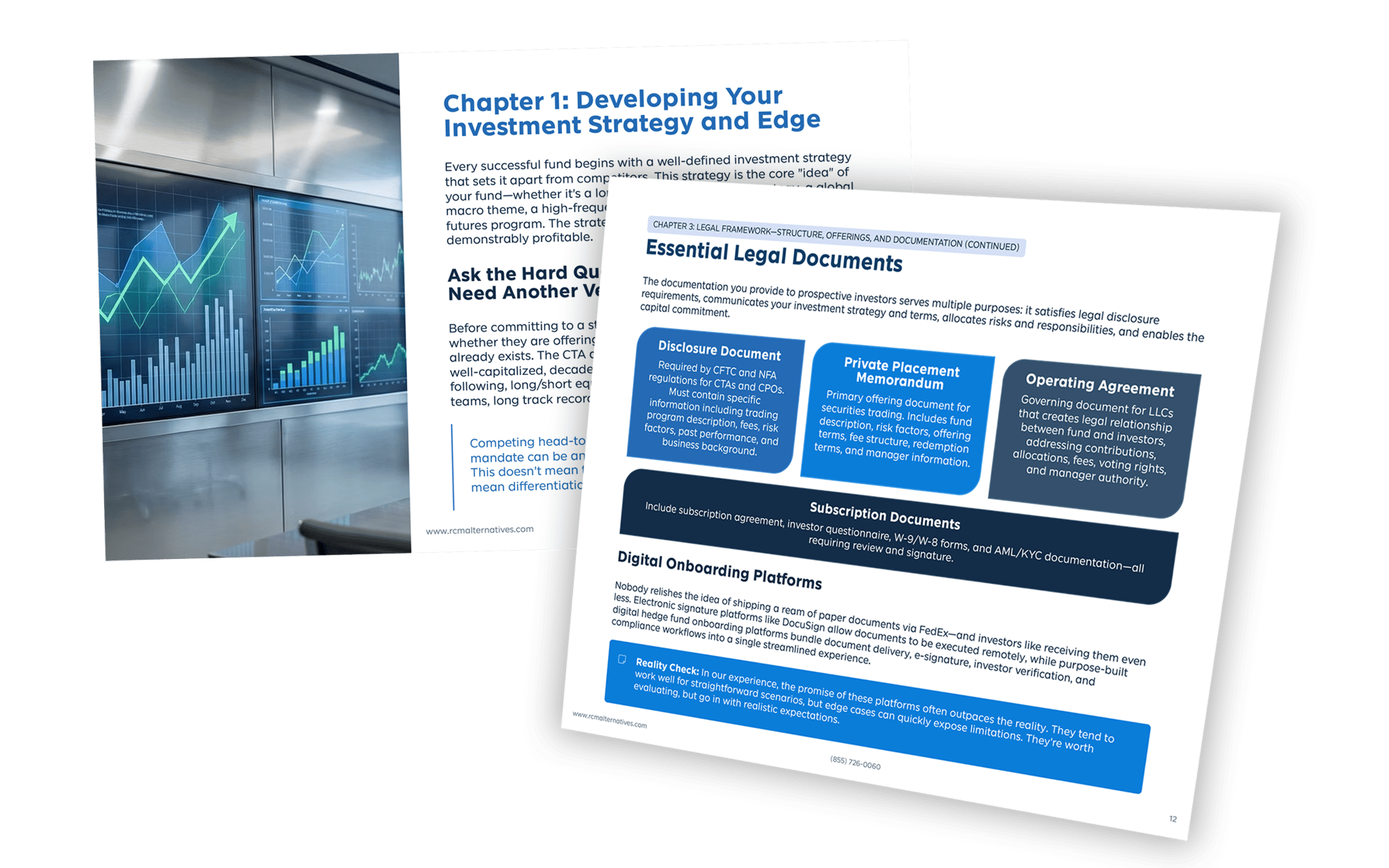
A comprehensive, in-depth eBook covering structure, regulation, service providers, fundraising, and launch planning.
-
A condensed executive overview that outlines the key decisions and milestones required to move from trading strategy to operating investment manager.
The Complete Guide
How to Start a Hedge Fund, CTA, or CPO (Full eBook)
This is the detailed roadmap.
The full guide walks through:
Defining and articulating a defensible investment edgeBuilding a credible live track record
Structuring the management company and fund entities correctly
Understanding SEC, state, CFTC, and NFA registration frameworks
Selecting and coordinating service providers
Designing institutional operational infrastructure
Planning realistic fund economics and runway
Navigating Regulation D and capital raising rules
Executing a structured 3–6 month launch timeline
Operating as a fiduciary from day one
If you are serious about launching, or actively preparing to raise capital, this version provides the depth needed to make informed structural decisions.
Best for:
Emerging managers in active planning mode who want detailed guidance before engaging legal and compliance providers.
The Condensed Overview
How to Start a Hedge Fund, CTA, or CPO (Executive Summary)
This shorter version provides a focused, practical recap of the core decisions every emerging manager must make.
It outlines:
What investors expect before allocating capitalThe difference between owning a fund and owning a management company
Core structural considerations
Registration and exemption basics
Infrastructure expectations
Realistic fee and operating cost planning
Early-stage fundraising dynamics
The mindset required to operate as a fiduciary
It is designed to give you clarity quickly, without overwhelming detail.
Best for:
Traders exploring the idea of launching, professionals evaluating the transition to independent management, or managers who want a high-level roadmap before diving deeper.
Not Sure Which One to Start With?
If you are:
Still evaluating whether launching is realistic → start with the Condensed Overview.
Already building a track record or speaking with service providers → download the Full eBook.
Many managers read the short version first and then use the full guide as a working reference throughout the launch process.
©2026 RCM Alternatives, Licensed Managed Futures, Trading System & Commodity Brokers. All Rights Reserved. Legal & Disclaimers | Privacy Policy
IMPORTANT RISK DISCLOSURE
The risk of loss in trading commodity futures contracts, whether on one's own or through a managed account or pooled ‘fund’, can be substantial. You should therefore carefully consider whether such trading is suitable for you in light of your financial condition. You may sustain a total loss of the initial margin funds and any additional funds that you deposit with your broker to establish or maintain a position in the commodity futures market . Any specific investment or investment service contained or referred to in this website is intended for accredited investors only and is not suitable for all investors. You should not rely on any of the information as a substitute for the exercise of your own skill and judgment in making such a decision on the appropriateness of such investments. Finally, the ability to withstand losses and to adhere to a particular trading program or fund in spite of trading losses are material points which can adversely affect investor performance. Past performance is not necessarily indicative of future results.